The Burke Museum App is a high-fidelity concept for a supplemental app for the Burke Museum of Natural History and Culture that focuses on enhancing exploration, intrigue, and learning during the user's museum experience.
Burke Museum App
INTERFACE DESIGN, INTERACTION DESIGN, MOTION DESIGN
TEAM
Aidan Moeck, Lee Hardisty, Emily Hao
TOOLS
Figma, Photoshop, After Effects, Premiere Pro
ROLE
Visual Designer
DURATION
Eight Weeks, Team
For learners of all ages!
Regardless of your knowledge of pre-history, the Burke Museum App serves as an exploratory and accessible way to foster in-the-moment-discovery and learning by encouraging interactivity within the museum’s exhibits, research, events and community.
Creating an Accessible Museum Experience
The Burke Museum takes accessibility and inclusion very seriously, and so do we. Within our app, we provided ways to navigate the museum, engage with events and news, dig deeper (pun intended) into the stories behind the fossils, and reflect on their trip.
Navigating the Museum
The Burke Museum is structured into three distinct floors with very distinct offerings. We wanted to provide guests with the ability to navigate the space easily and see special offerings.
Events and News
The Burke puts on a lot of special events for the public to interact with their mission and collection, and featuring them was integral to our mission of cataloguing the Burke experience.
Searching the Collection
The Burke's collection is huge, and the plaques don't often tell the whole story of the fossils! For more academically curious guests, we provided the ability to scan codes and take a deeper look into the Burke database.
Reflection Space
One of the Burke's biggest goals is to highlight the importance of their location on the lands of the Coast Salish peoples. Reflection, therefore, is integral to the space, and we wanted guests to be able to participate in that aspect of the Burke experience within the app.
Visual System
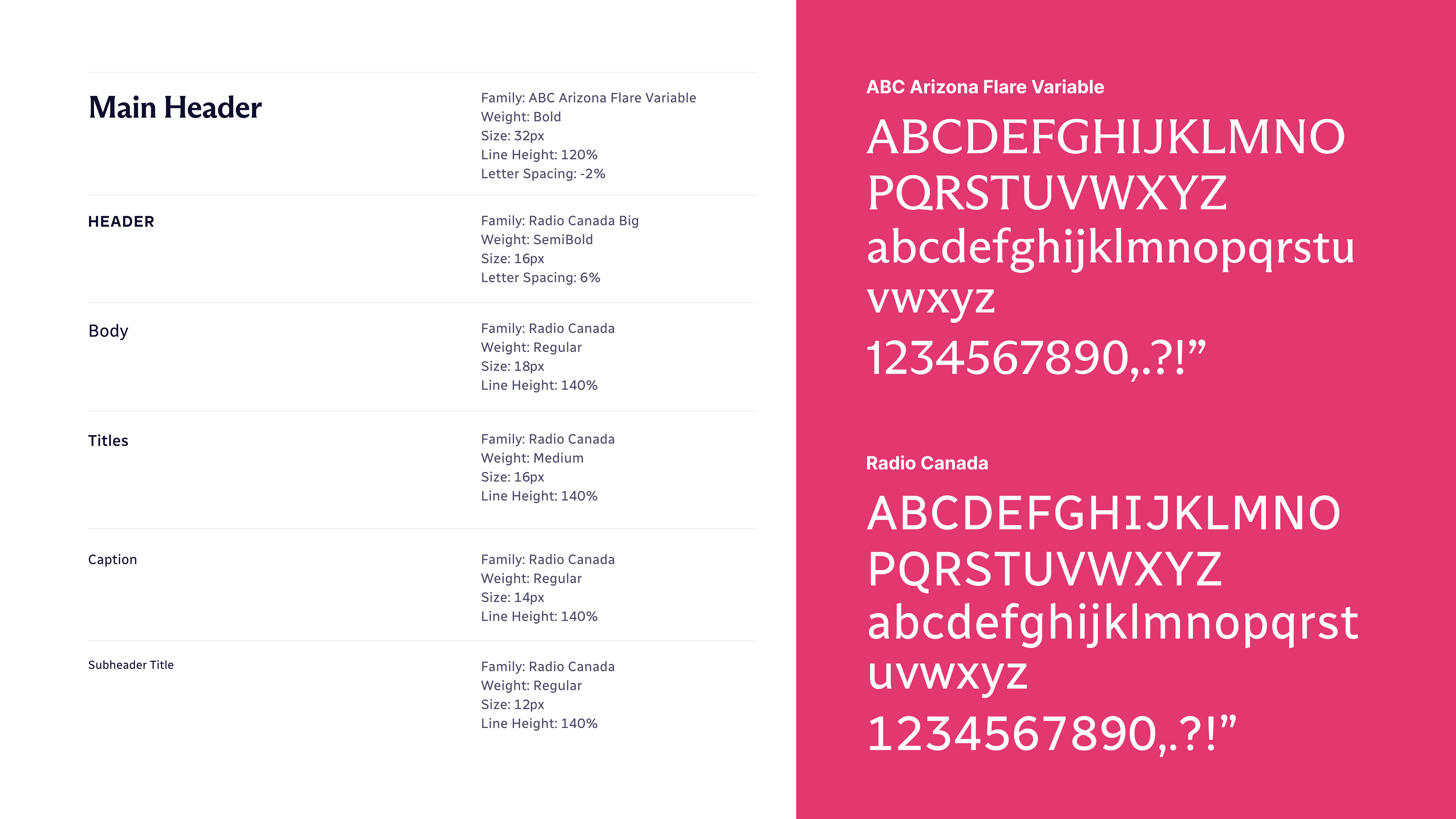
The Burke's visual design was strongly oriented towards accessibility and inclusion. This shines very specifically in our type system; were very intentional to choose Radio Canada, which included Native American syllabics, in order to reflect the Burke's mission.
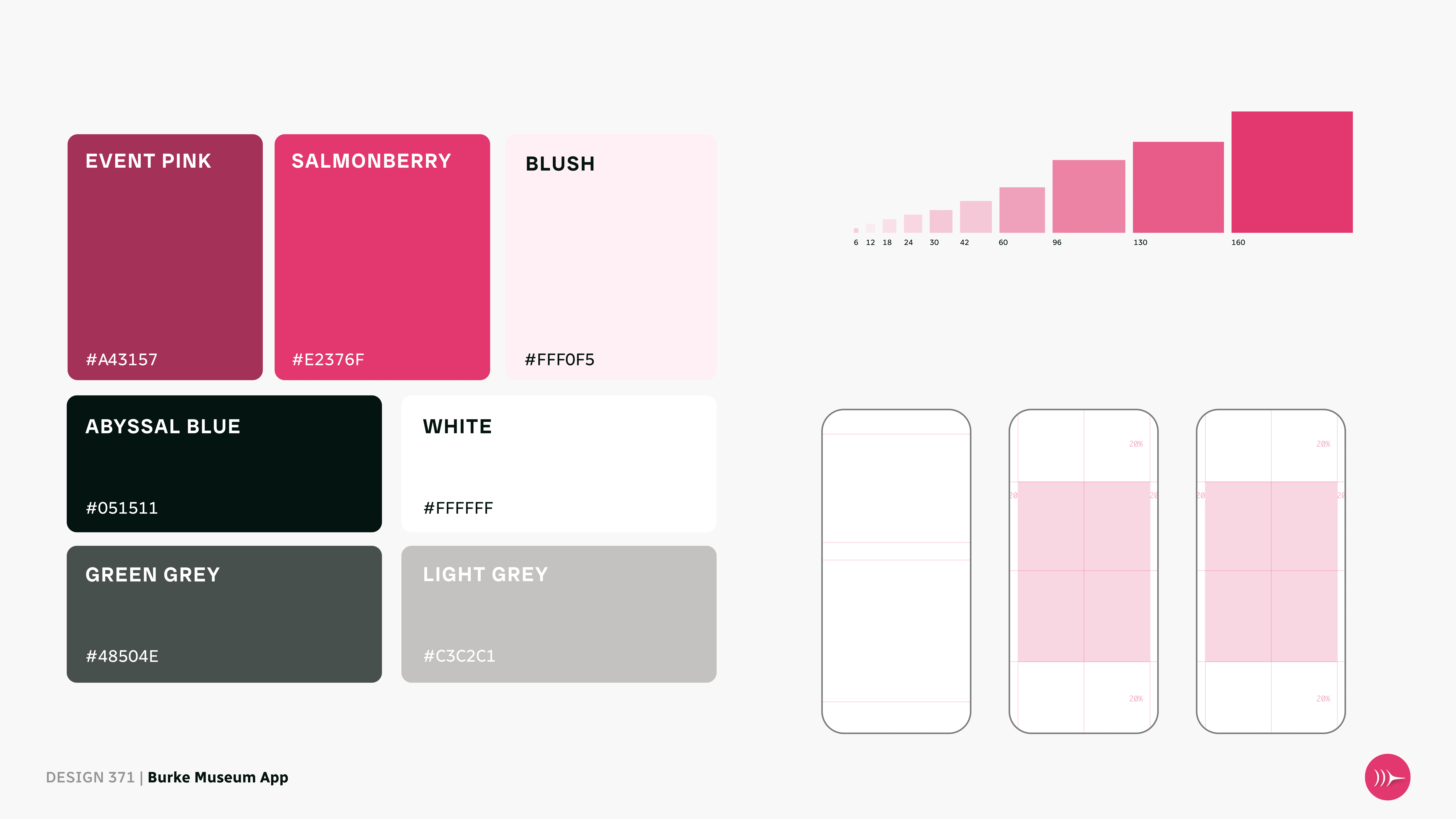
The app's main color system.
Our type system.
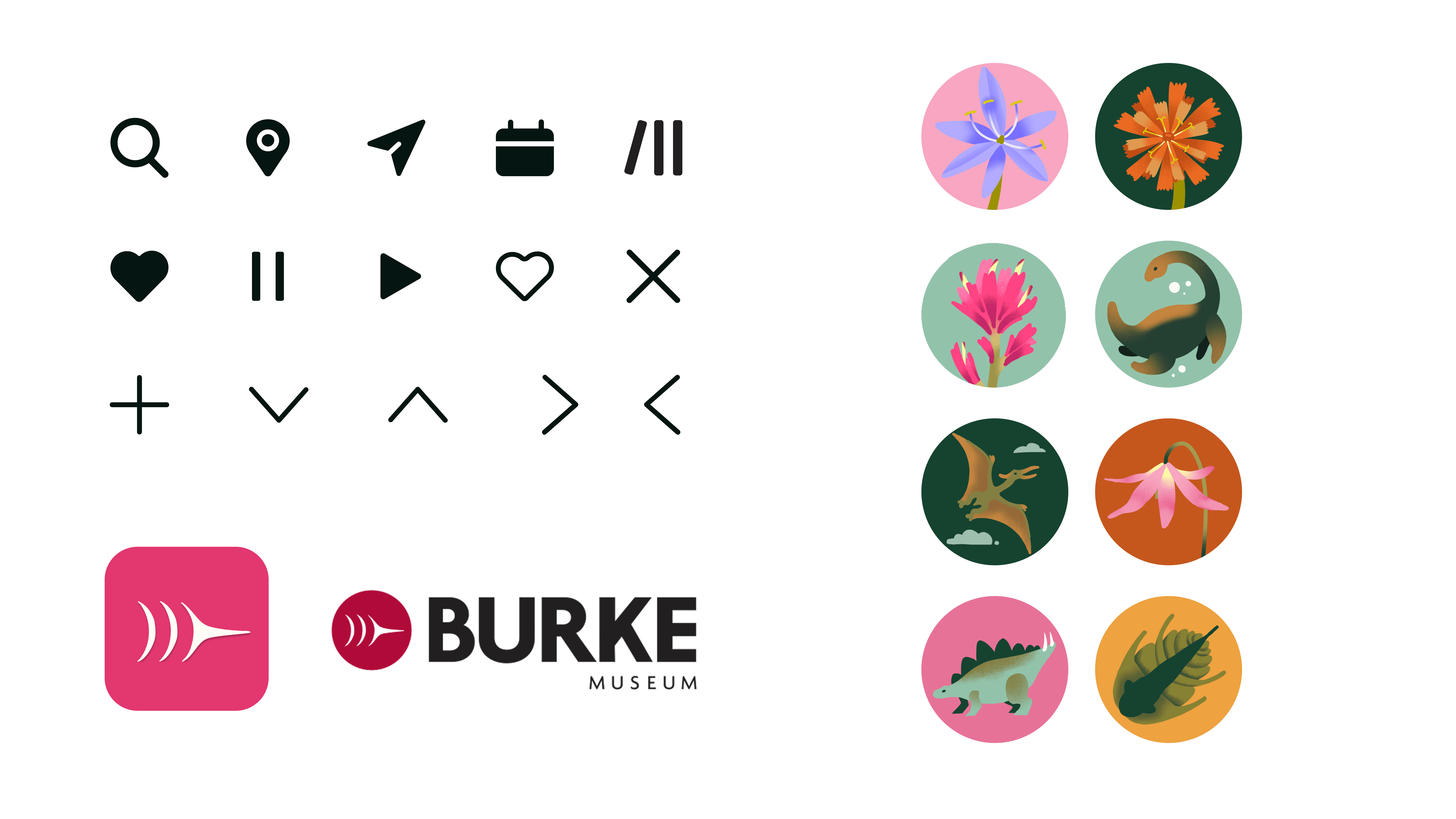
Symbols, including illustrative badges.
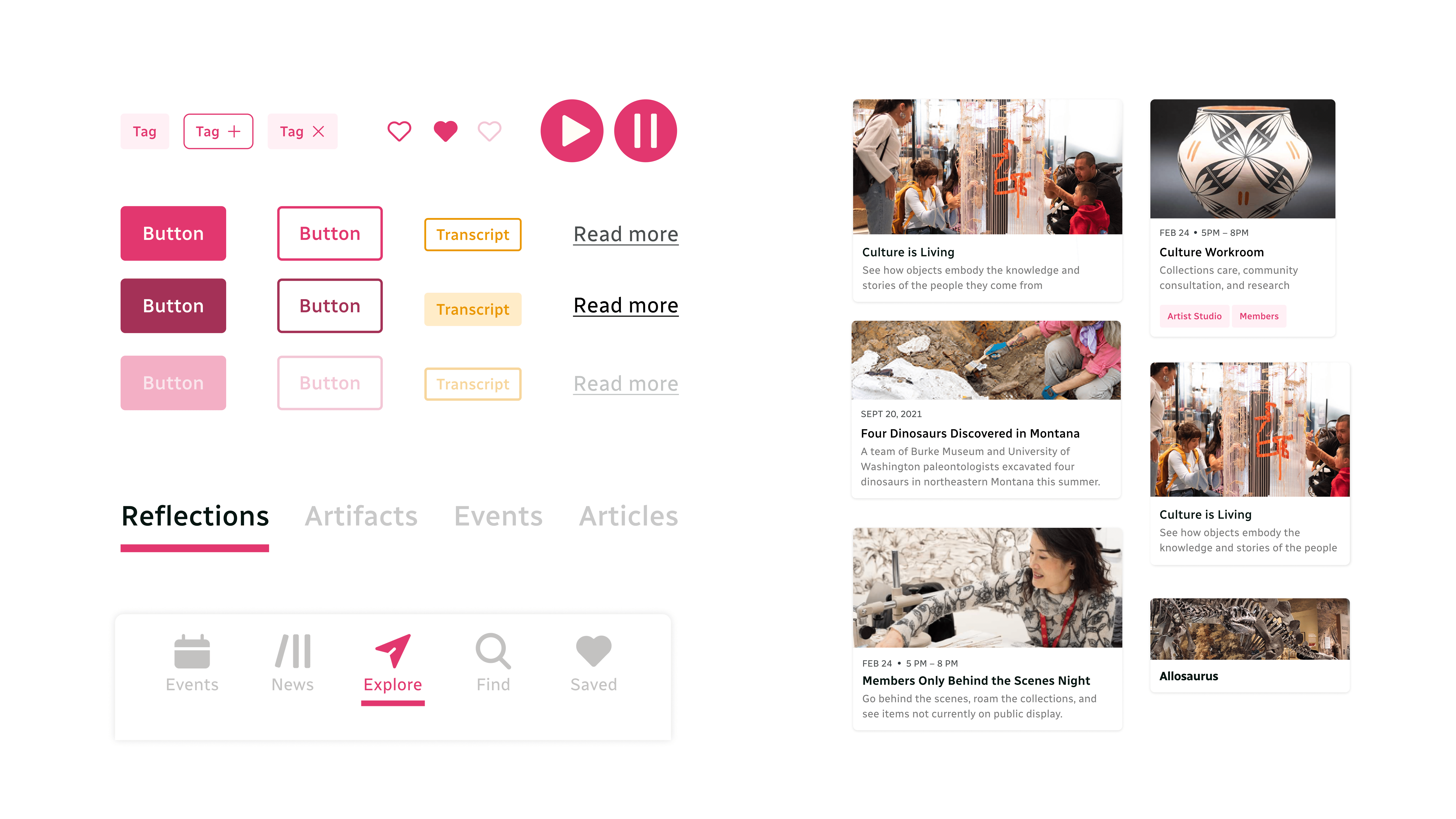
The Burke App's buttons.
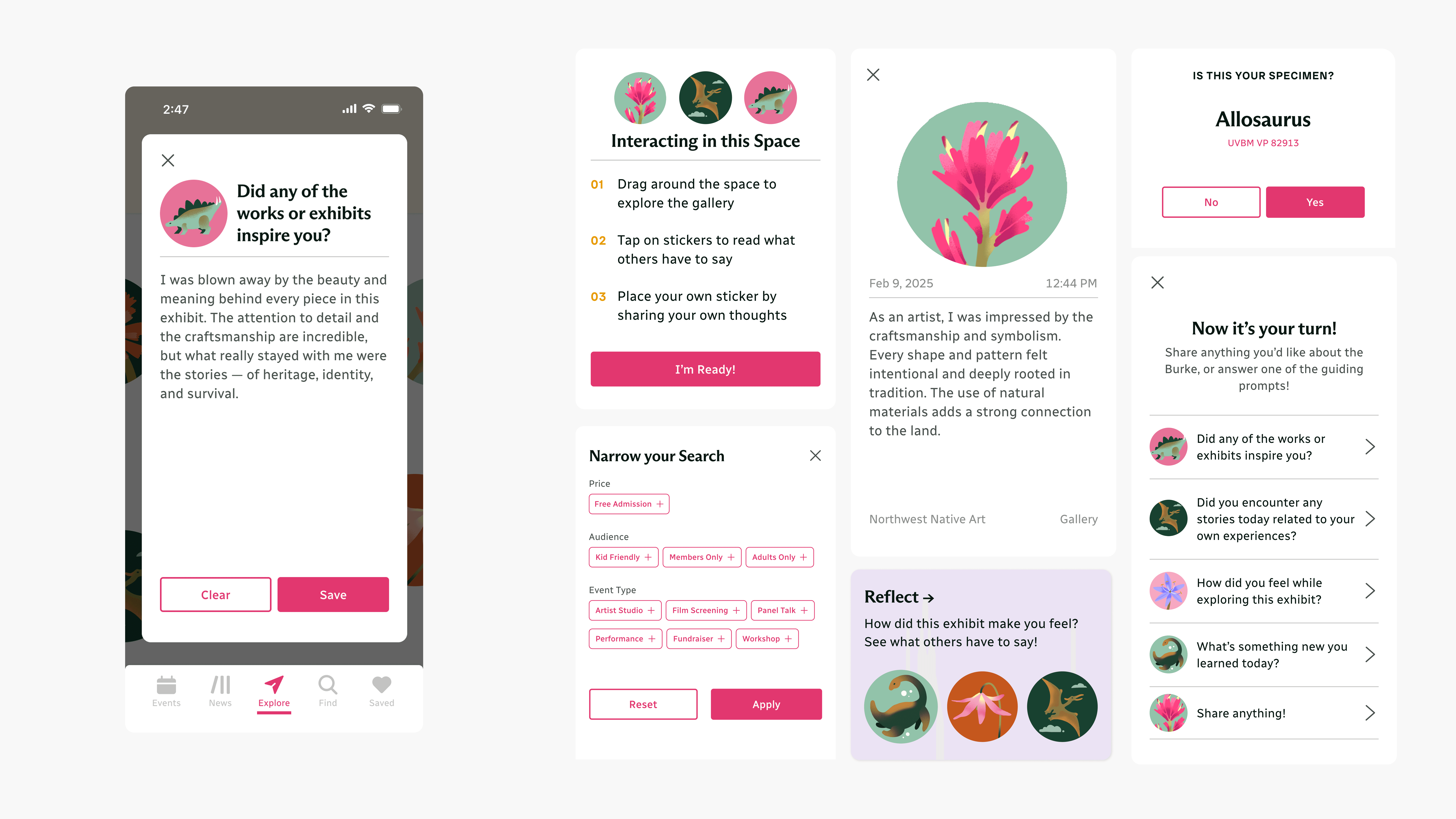
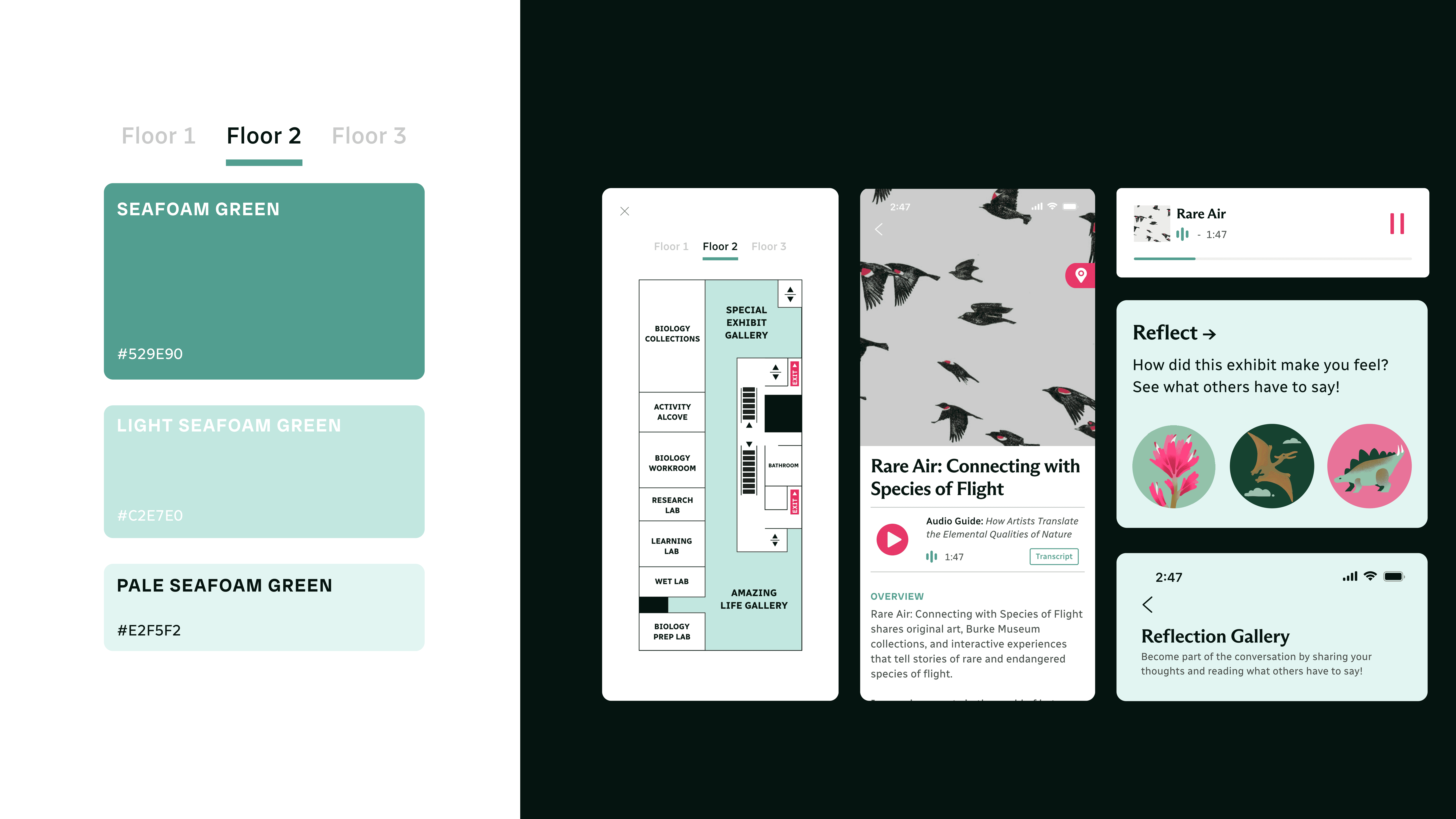
The Burke App's Cards.
A color system for a specific floor.
Takeaways and Next Steps
It was lovely to work with such a dedicated team! In the future, we would love to expand the Burke App's capabilities to further reflect the museum's interests. We would also love to see the Burke App become a real feature of the museum.